Our story

A workshop, not a figurehead.

A standing team of Vedic astrology analysts, one written standard, and an instrument we built ourselves to hold what no single jyotishi can.

What we were up against

Two things had gone wrong long before we arrived.

Not the vague horoscopes you see everywhere — those are only a symptom. The causes run deeper, and they are structural.

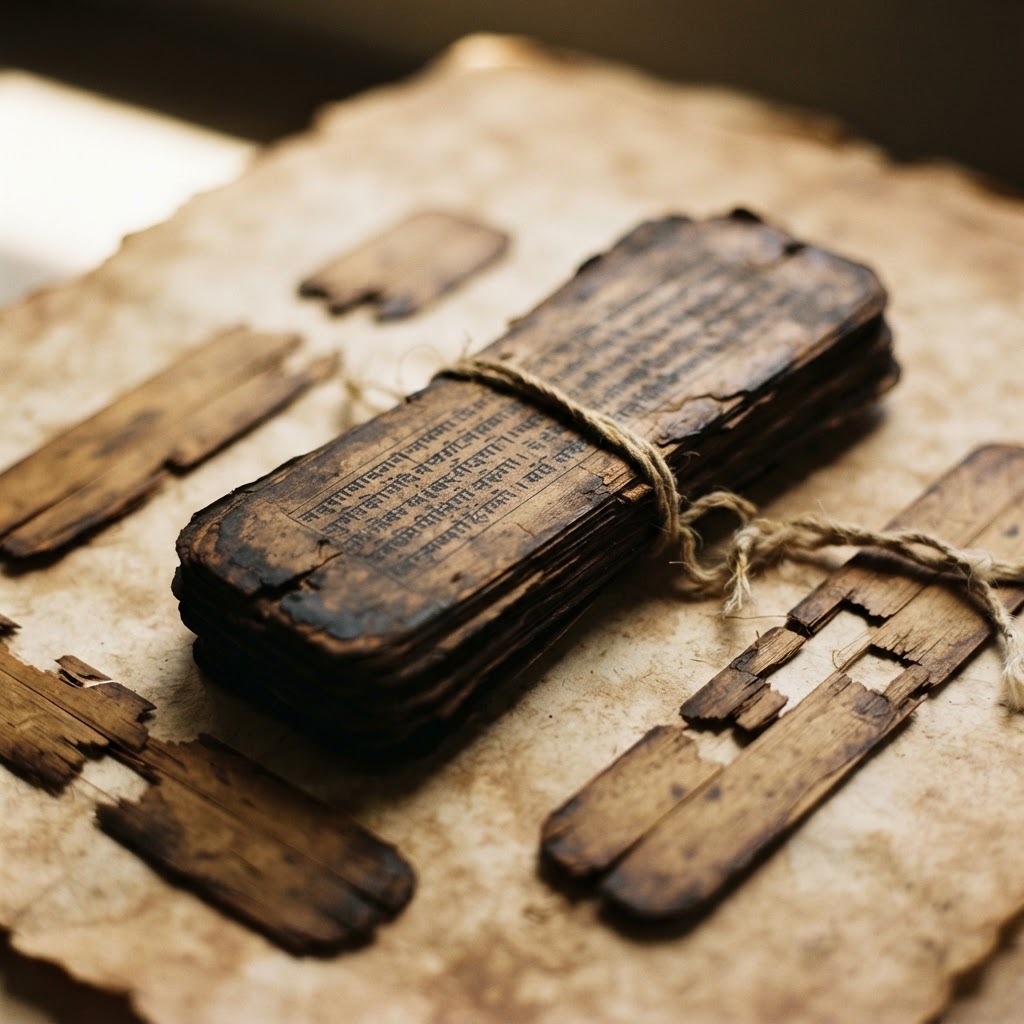
Aged palm-leaf manuscript folios with broken edges and missing leaves
01

The lone guru

For centuries in this land, the deepest rigour lived inside one person. Learned at the feet of a teacher, carried in memory, applied to the few charts that reached them. When that person passed, the vidya went with them. The standard was never written down in a form anyone else could hold to.

02

A broken inheritance

Over centuries, commentaries were lost and lineages broke. What had once been a single, complete shastra survived only as fragments — scattered across paramparas that no longer spoke to one another, each holding a piece and missing the rest. What a jyotishi inherits today is an incomplete thing, and few will say so.

Why a collective

No single jyotishi can hold all of this at once.

A learned astrologer can carry hundreds of signals in memory — for one chart, on a good day, after thirty years at the feet of a teacher. What no one has ever been able to do is hold that steadiness across hundreds of charts, and then prove it afterwards.

That was the realisation that started us. The limit was never talent. It was capacity, memory, and the absence of any record a second person could check.

So Praman Jyotish was built as a shaala, a workshop, rather than a single practice. A standing team of analysts, one written standard, and a tool we built ourselves.

The instrument

The Praman System sits on our bench. It is not the jyotishi.

An artisan workbench with brass instruments, ink, ledgers and a parchment chart in warm lamplight
Hundreds
Signals read per chart
Hundreds
Charts in the reference corpus
Built in-house
From the ground up

We built it ourselves, from nothing, because nothing like it existed to be bought. It holds hundreds of signals across hundreds of charts in view at the same time — precisely the work a human mind cannot keep up for long.

What it does not do is decide. It surfaces, it cross-checks, it flags where the evidence thins. Then it places the whole picture before an analyst, who makes the call and signs their name to it.

Recovering what was lost

Our inheritance arrives incomplete — commentaries that survive only in part, fragments preserved inside different paramparas, regional lineages that each kept a different piece and let the rest go. For centuries there was no way to lay it all together and see the whole.

The Praman System draws on the full inheritance — the Indian classical corpus and the Western astrological tradition alike — to recover the shape of what fragmentation erased. Where the fragments agree, we can reconstruct what the complete method most likely was. Where they do not, we say so, and leave the gap untouched.

This is the first real chance in five hundred years to put a fractured inheritance back together — and to do it in writing, where it can be checked.

The collective

Every prediction is made by hand, by a person who answers for it.

We do not put a face on this practice, and that is deliberate. A named figurehead is exactly the fragile arrangement we set out to leave behind. In its place is a standing team working to one written standard, so the standard belongs to the shaala, not to any one person in it.

They work as vidvans, not operators. The Praman System proposes; the team adjudicates. Every interpretive line in your report is written by hand by the analyst responsible, and their name goes on it.

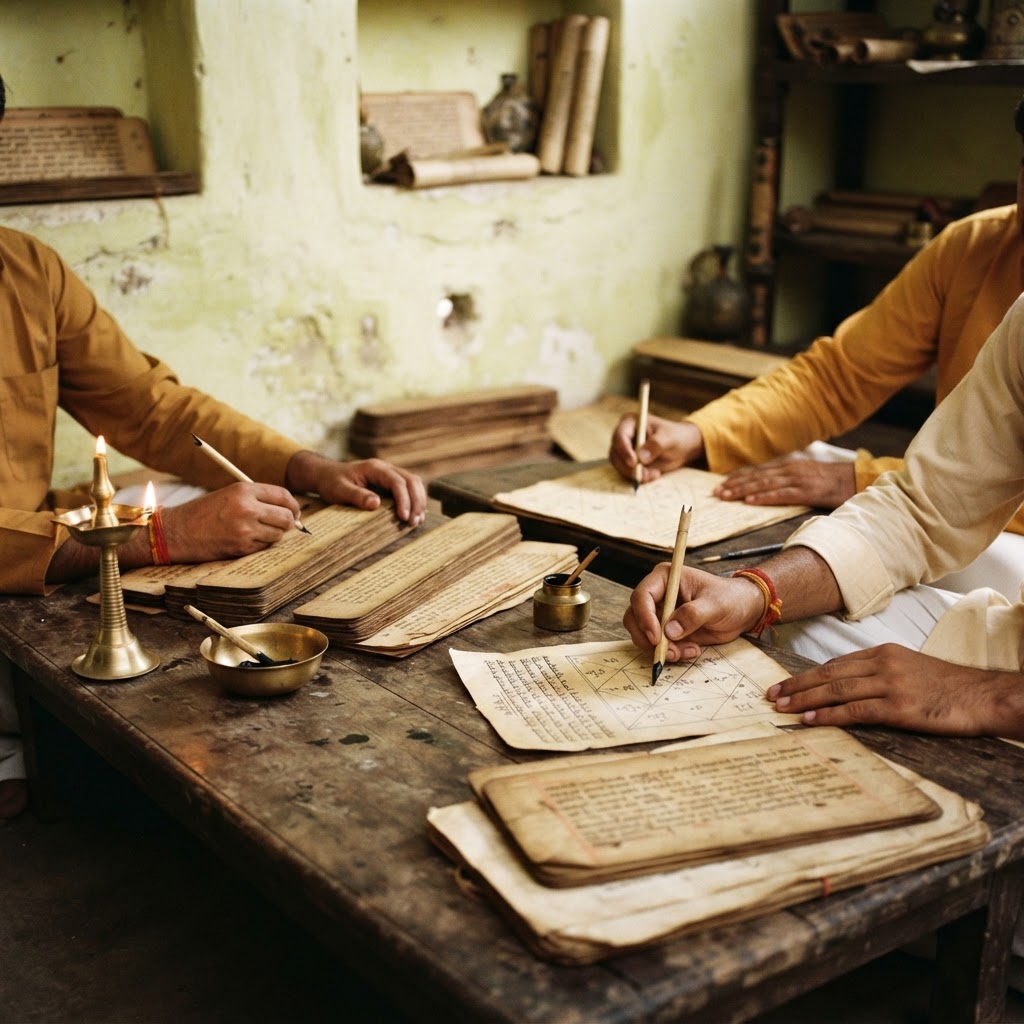
Anonymous hands of four analysts annotating palm-leaf manuscripts and kundali charts at a shared low wooden table

Lead Analyst

Carries the reading from beginning to end. Weighs what the instrument has surfaced, decides what is defensible, and signs the result.

Rectification Lead

Settles the birth time against events you have actually lived, before any reading proceeds. Holds the authority to stop the work.

Editor

Reads every line for hedging, overreach and false comfort. Nothing vague survives this desk.

Corpus Researcher

Traces each technique back through the classical sources and the surviving fragments, and records what is reconstructed and what is attested.

Our order of evidence

A signed human prediction
Team consensus
A system suggestion

In that order, always. A suggestion from the instrument never outranks a judgement a person is willing to sign.

What the team commits to

These are our working rules, not settings in our software.

01

We test before we tell you

No analyst here writes a future window until your chart has first explained the past you have already lived. That is a rule the shaala holds itself to, not a setting in our software.

02

We disclose our disagreements

Three classical systems are consulted independently. Where the team cannot arrive at consensus, you are told so in writing, and nothing is published.

03

We score our own work

Every prediction carries a Praman Score, so you can see exactly how much confidence the team is claiming — instead of simply taking our word for it.

We did not set out to replace the guru. We set out to build a shaala that could hold what no single guru ever could — hundreds of charts, hundreds of signals, and one standard written down where you can check it.

Book a Session

Live, one-to-one · Backtest guarantee

Keep reading